When discussing the theme of place for Iran and Iraq, the distinction between “site” and “situation” should be made. A place’s site is its physical characteristics, where a place’s situation includes its political, economic, and social characteristics.
Site
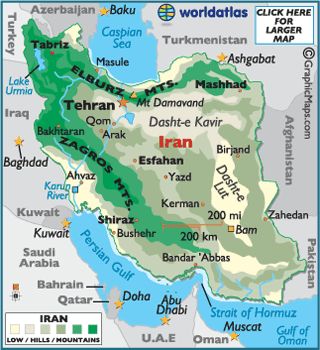
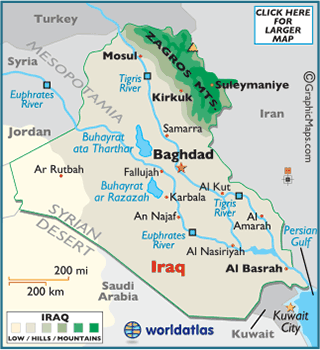
From the start we can see that despite their similar locations, Iran and Iraq boast vastly different physical geographical characteristics. Simply glancing over the topographic maps above shows this. Iran’s terrain is more rugged and mountainous, whereas Iran’s terrain is going to be much more flat. It should be noted that it’s only mountainous region is going to be along its shared border with Iran. There are numerous mountain ranges located within Iran. The western region consists of the Caucasus, Alborz, and Zagros ranges and to the north are the Elburz. The varying degrees of elevation caused by these ranges contribute to Iran’s diverse climate as well. While the country still receives a relatively low average rain fall less than 10 inches, the hike in elevation throughout its mountainous regions create the conditions necessary to produce average rainfalls much higher. The Zagros Mountains boast an average rainfall almost twice as much as the countries average around 20 inches (Climate of Iran). The increase in rainfall creates forests along those mountains that contradicts our notions of the barren deserts we have of the Middle East. The low relief throughout neighboring Iraq, however, does consist of those sweeping desert landscapes throughout the country. The most drastic changes in elevation and climate occur along the Zagros Mountains that it shares with Iran. The low relief coupled with Iraq’s location on the earth creates a country with a mostly arid or semi arid climate. According to Encyclopedia Brittanica, without the mountainous regions that Iran possesses the average rainfall in Iraq is lower between 4 and 7 inches. The summers throughout the deserts of Iraq can reach temperatures of 123 °F and the winters as drop to temperatures as low as 12 °F. (Khadduri et al). Comparing the climates to Iran is slightly more difficult due to the diverse landscape it boasts. While the temperature extremes throughout the arid and semi arid deserts are similar. You will find relatively more mild temperatures in the fall and spring seasons in the northwestern subtropical climates due to the mountains and coastlines (Climate of Iran).
Situation
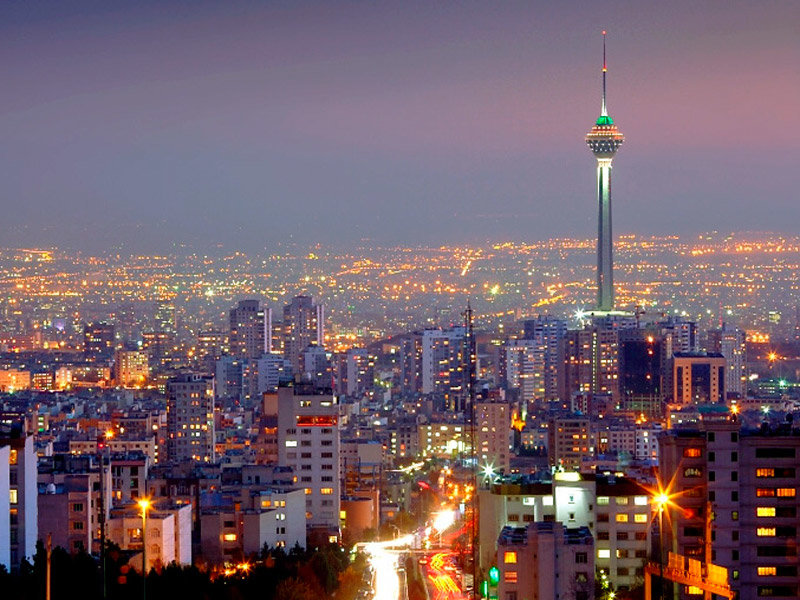
Tehran, the capital of Iran 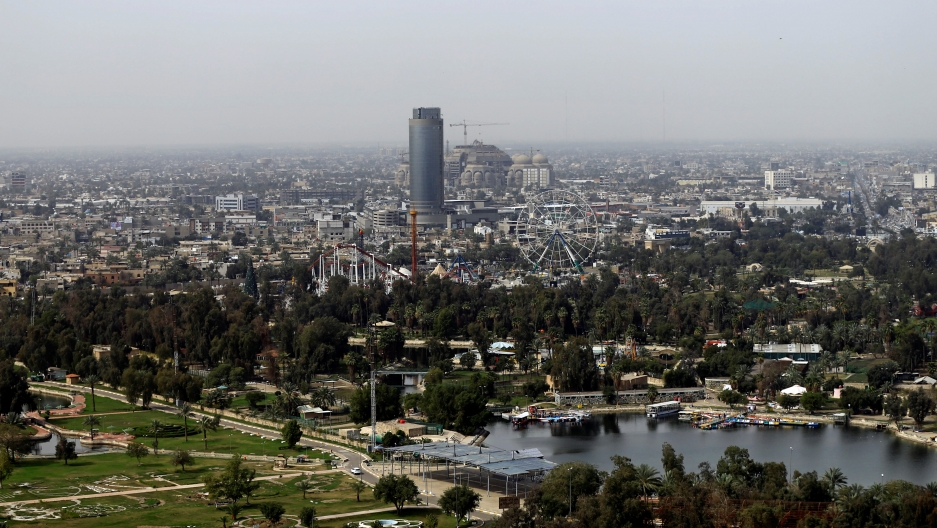
Baghdad, the capital of Iraq
By taking a closer look into the situations of these two countries we can hopefully develop a deeper appreciation of what makes these two places unique and special or even where some of our negative assumptions about come from. While it is true that in recent years the Middle East has been one of the most volatile regions in the world, it should be noted that much of that political instability has come from outside forces. Both countries are heirs to some of first great civilizations of man whose histories have been continually shaped by their locations. Their locations placed them at the center of the ancient world as meccas of trade. In modern times it was discovered that these two countries sat on some of largest natural gas and crude oil reserves in the world. It is those reserves that have been the cause of so much of the political unrest and turmoil seen today. The political systems of both of these places saw massive upheaval in recent years. The Islamic Revolution in 1979 brought about an end to the Pahlavi Dynasty and replaced the monarchy with a theocracy. The US invasion of Iraq in 2003 saw the toppling of Saddam Hussein’s regime. For a more detailed timeline of events of the history of these two events, please take a look at BBC’s country profiles by the following these two links: Iraq and Iran. The two links also go in much greater depth on the leaders within the political system as well, while still important I will be focusing on the political cultures of the place more and how these events have impacted these two places.
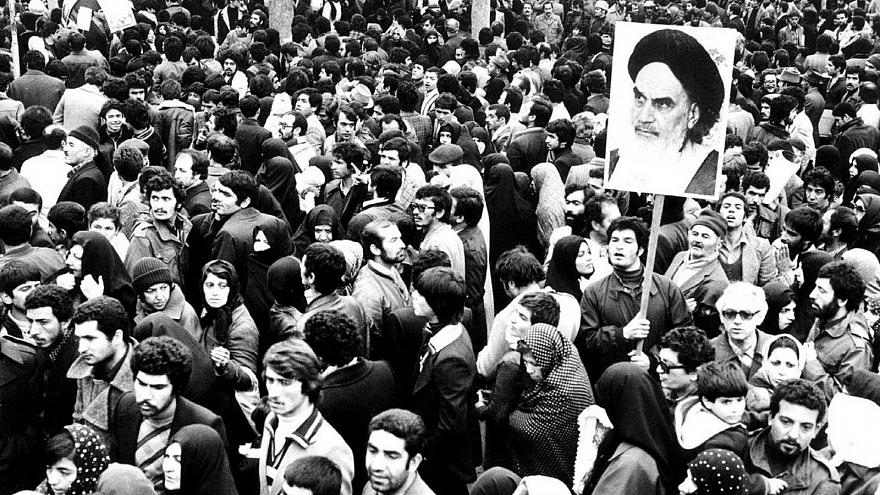
The Iranian Revolution of 1974 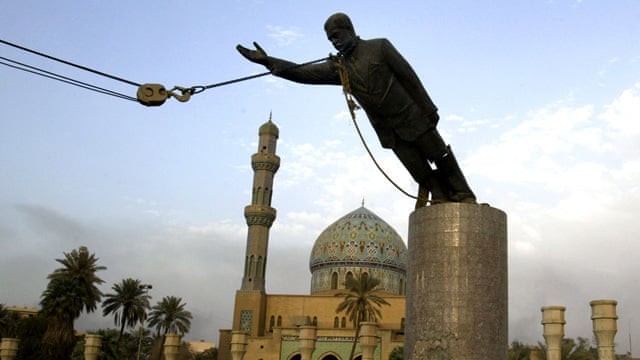
Toppling of Saddam Hussein in 2003
The Islamic Revolution brought about drastic changes not only to the political system’s structure, but also to the culture throughout the system. A once secular political system that promoted and pushed western ideologies was now replaced by a theocracy with religious fundamentalists and extremists who reject any notion of the west as an affront to their religious views. The United States’ relationship with the Pahlavi played a major role in the bringing about the revolution, and the ruling party adopted policies that reflected as such. Despite this, however, there seems to be a disconnect between the attitudes of the Iranian people and the ruling party about the lasting impact the US had on the country. The Islamic Republic of Iran is anything but a republic and function more as an autocracy. Any and all major decisions must be vetted by the Supreme Leader leaving the possibility of reform nonexistent without another major upheaval occurring. Take a look at the diagram below, notice all of the arrows must make there way through the Supreme Leader throughout the system. Every elected official must be approved by the Supreme Leader, or by a body of officials that he appointed.
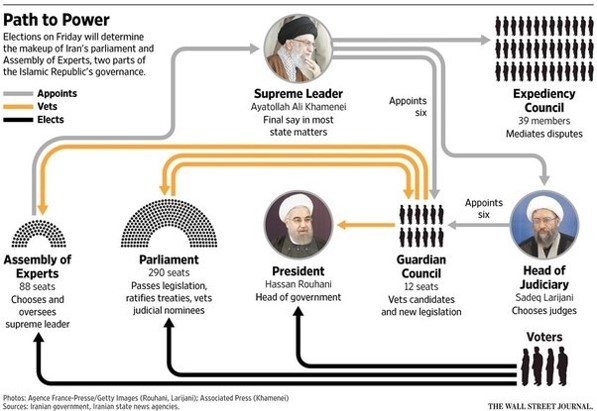
While parties are not permitted within the Iranian political system, we can make distinctions between four different groupings: Radicals, conservatives, reformists, and liberals. Radicals are those who still maintain that revolutionary zeal and believe that the strict religious fundamentalist views should be the driving force in all policy making decisions. Conservatives, while still wanting to adhere to fundamentalist views, are calmer and wish for a country that is not as fanatical. Reformist wish for a Islamic republic that offers more political, economic, and social freedoms and slightly less Islamic supervision of their country. Liberals are composed mostly of young Iranian students who want a complete abolishment of Islamic supervision within Iran and to see the current system replaced with a democracy (Roskin 466). While the ruling party in Iran has maintained power and control over the country, Iraq has faced numerous challenges since the overthrowing of Saddam Hussein in 2003. Nature abhors a vacuum, and the void left by the dictator was filled by a few different groups.
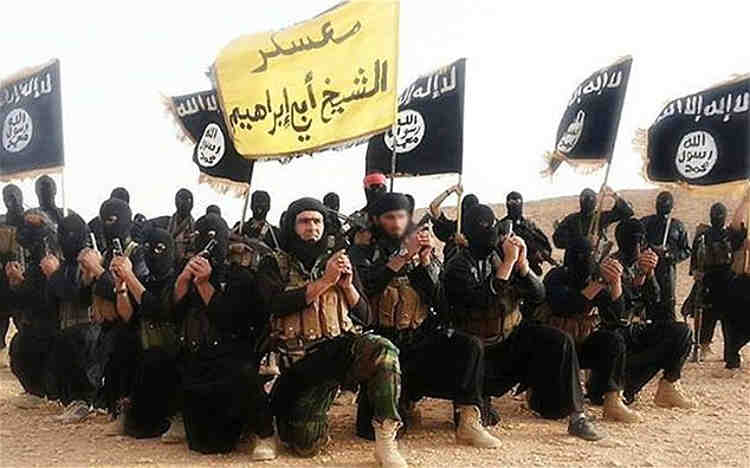
The picture above is of ISIS, a religious extremist and terrorist organization that rose to power after the invasion of Iraq. ISIS attempted to establish an Islamic caliphate, and almost succeeded in doing so. Their extreme religious views and governance policies were brutal. A strict and fanatical adherence to their version of Islamic law resulted in some of the most godless acts ever committed in recent years. After taking the city of Mosul, they controlled more territory in Iraq than the government did. At the cost of an immense amount of human life, ISIS was defeated. According to an article by The Economist that details the fifteen years following the US invasion of Iraq, around 30,000 Iraqis and 20,000 ISIS fighters were killed during the conflict. World Heritage sites were reduced to rubble and 6 million people lost their homes (Under Construction). This was a huge wake-up call for the Iraqi people, as the country is slowly regaining some amount of stability and unity. And while the country has a long way to go and is still at high risk of losing its footing again, the unity within the Iraqi people has given the country the chance it needs. The Republic of Iraq must still face down armed insurgencies, corruption, religious differences, and weak government officials to secure this opportunity. But in doing so they must not create the same conditions that brought about the rise of ISIS to begin with. To understand that, it is best we look at both Iraq and Iran interact with the religion of Islam.
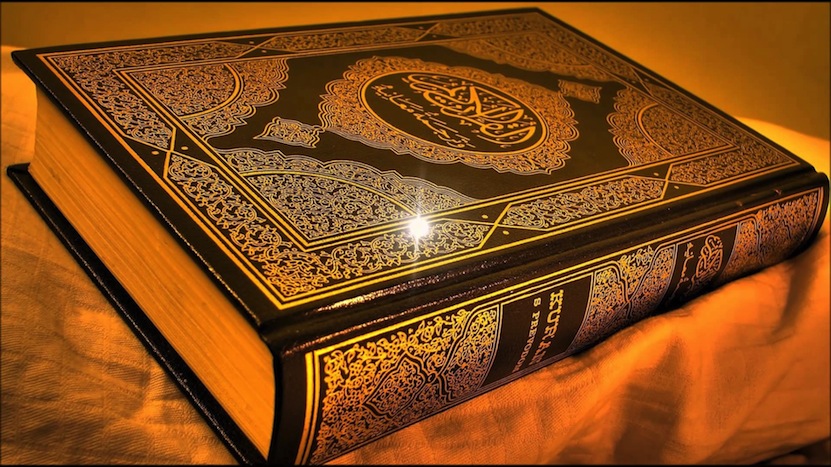
The Muslim faith is split between two groups: The Sunni majority and the Shia minority. The Sunnis consist of around 90% of the global population while the Shia minority consist of the remaining 10%. While I will not be focusing on the differences between the two branches, please refer to this BBC article should you wish to gather more information. Iran and Iraq are unique in that they are each one of the few places where the Shia branch is actually the dominate branch within their borders. Having a minority branch of Islam as a majority has affected the situations of these two places greatly. The Shia branch of Islam was established as the the state religion in Persia at the start of the 1500’s by the Safavid Dynasty. It allowed the Safavids to establish a distinct Persian identity while also giving them the means to consolidate their power within the political system (Roskin 459). For Iraq, the majority of the jihadist insurgencies the countries has seen have been Sunni minorities. Both ISIS and Al-Qaeda were followers of the Sunni branch of Islam that emerged after the overthrowing of Saddam Hussein. According to David Zuchinno from The New York Times, the Sunnis lost a bulk of their political power after the new government was established. With many Sunnis being ousted from government jobs or positions of power while the Shiites gained more power, it laid down the seeds of resentment that gave way to jihadist insurgencies like ISIS (Sunnis Remain Alienated). The US invasion of Iraq and the following policy decisions created the environment needed for one of the most deadly and horrific conflicts of recent times. The situations of both Iran and Iraq consist of many parallels, but also many differences. They have been consistently shaped by their interactions by western countries however that they each boast histories that dwarf those (relatively speaking) of those same western countries. As Americans, we can hopefully see the dire consequences of our actions within other countries and learn from past mistakes.
Works Cited
Congress. “Is the Climate of Iran as Dry as You Think It Is?” ThoughtCo, ThoughtCo, 8 Mar. 2017, http://www.thoughtco.com/climate-of-iran-120224.
Khadduri, Majid, and John E. Woods. “Iraq.” Encyclopædia Britannica, Encyclopædia Britannica, Inc., 25 Oct. 2018, http://www.britannica.com/place/Iraq/Climate.
Roskin, Michael G. Countries and Concepts: Politics, Geography, Culture. Longman, 2008.
“Under Consruction.” The Economist, The Economist Newspaper, 31 Mar. 2018, http://www.economist.com/middle-east-and-africa/2018/03/31/fifteen-years-after-americas-invasion-iraq-is-getting-back-on-its-feet.Zucchino, David. “As ISIS Is
Driven From Iraq, Sunnis Remain Alienated.” The New York Times, The New York Times, 26 Oct. 2017, http://www.nytimes.com/2017/10/26/world/middleeast/iraq-isis-sunni.html.
 Human Geography: The Five Themes of Geography